
From India to Australia: Using a Virtual Address When Expanding Your Business Overseas

Australia is an attractive expansion market for Indian technology companies, professional-service firms, manufacturers, ecommerce businesses and startups. The two countries have strong commercial ties but opening an Australian operation involves more than launching an Australian website and adding AUD pricing. There are decisions to make around corporate structure, taxation, registrations, local representation and addresses. One of the earliest practical questions is deceptively simple: What Australian address will the business use? Two common ways an Indian company enters Australia An Indian company looking to establish operations in Australia will generally need professional advice about the structure that best fits its circumstances. At a high level, two potential routes are particularly relevant. Establish an Australian company The Indian business may establish a separate Australian company, commonly operating as an Australian subsidiary. An Australian company must provide ASIC with a registered office address and principal place of business address. ASIC states that its registered office must be a physical street address in Australia and cannot be a PO Box. The company does not necessarily need to conduct its day-to-day operations from the registered office. If somebody else occupies the premises, their consent is required for the company to use the address. Register the Indian entity as a foreign company Alternatively, an overseas company carrying on business in Australia may need to register with ASIC as a foreign company rather than incorporating an Australian subsidiary. ASIC states that a foreign company carrying on business in Australia must generally register unless it instead establishes an Australian company to conduct the business. Registered foreign companies have several continuing obligations including maintaining an Australian registered office and appointing a local agent resident in Australia. The right structure depends on the company’s activities, ownership, taxation and commercial objectives. This is an area where specialist Australian and Indian tax or corporate advice is valuable. Where does a virtual address fit? For companies that do not immediately need permanent Australian premises, virtual address and business registration in Australia services can help solve the address component of market entry. Instead of leasing an office before revenue justifies it, a business can establish a compliant address arrangement and have mail managed remotely. Depending on the provider, this can include: This can be especially useful during the first stages of expansion when senior management remains in India and the Australian operation is still being established. A virtual address does not replace a local agent This distinction is particularly important for Indian companies registering their existing Indian entity as a foreign company. ASIC requires a registered foreign company to have a local agent who is resident in Australia. The agent accepts notices on behalf of the foreign company and has defined responsibilities under Australian corporate law. A virtual address provider is therefore not automatically your local agent. Similarly, an address service does not replace an accountant, lawyer or tax adviser. Think of the virtual address as one component of the Australian infrastructure rather than a complete foreign-company registration solution. What about an ABN? Non-resident businesses may also be eligible for an Australian Business Number. The Australian Business Register states that non-residents may be entitled to an ABN when they are carrying on or starting an enterprise in Australia or making supplies connected with Australia’s indirect tax zone. A non-resident without an Australian tax file number can still apply but additional identity documentation and details of Australian business activities can be required. Again, simply purchasing an address does not automatically make a business eligible for an ABN. Eligibility depends on the business itself. Australian compliance changed in 2026 Companies entering Australia should also be aware of changes affecting the providers they use. AUSTRAC’s expanded AML/CTF regime includes, from 1 July 2026, specified services involving the provision of registered-office or principal-place-of-business addresses. AUSTRAC says the rules can apply where a provider makes an address available for a company to use instead of the location from which the company actually operates. Providers subject to the regime have obligations including customer due diligence. For an Indian company, this means requests for corporate documents, ownership information or identification should not necessarily be viewed as friction. They may form part of Australia’s compliance environment. A sensible Australian expansion sequence Before committing significant capital to premises, an Indian business could approach expansion in stages: This approach keeps fixed costs relatively lean while the company validates the market. Start with infrastructure that can grow with the business International expansion often tempts companies into making expensive commitments too early. A large office might look impressive but it does not create customers. For many Indian businesses, the smarter first step is establishing the minimum compliant infrastructure needed to operate properly, then increasing physical presence as employees, customers and revenue grow. A virtual Australian address can form part of that approach. Just make sure the provider supports the specific registration purpose you require and remember that an address is one component of Australian market entry, not a substitute for the legal, taxation and corporate decisions behind it. Information current as at September 2026 and provided for general informational purposes only. Businesses expanding from India into Australia should obtain Australian and Indian legal and taxation advice relevant to their circumstances.

How Regular Shopping Bags Can Become Walking Promotions For Your Company

Many marketing campaigns fail almost as quickly as they begin, despite the fact that businesses invest a significant amount of money in advertising to attract consumers. When funds are depleted, print ads have little distribution, and promotional emails are often ignored, digital ads cease to provide impressions. Businesses seeking long-term marketing value are becoming more aware that some of the best advertising takes place outside of conventional media. For months or even years, a reusable shopping bag used at supermarkets, offices, public transportation, and community activities may promote a brand without the need for further advertising expenditures. Continuous Advertising Opportunities Are Created By Daily Activities The efficacy of promotional marketing relies not only on how many individuals acquire a product but also on how frequently that thing is seen subsequently. Reusable shopping bags organically become a part of consumers’ everyday habits, in contrast to brochures or fliers that are usually thrown away after only one use. They join individuals while grocery shopping, on excursions to farmers’ markets, on visits to retail malls, on library expeditions, at gym sessions, and even on weekend vacations. Businesses obtain continuous exposure without having to pay for new advertising locations since these activities take place often. Because the promotional product continues to function independently after distribution, marketing experts often refer to this as passive advertising. Promotional bags are among the most successful promotional products in terms of long-term exposure since they generate thousands of impressions over the course of their useful lives, according to research from the Advertising Specialty Institute (ASI). Instead of reaching just the initial buyer, the bag presents the brand to numerous new audiences every time it appears in public. The Difference In Shopping Bags Due To Public Visibility Many promotional items are solely beneficial to the recipient. Although they are still necessary, pens, notebooks, calendars, and coffee cups are mostly utilized in homes or workplaces where few people see them. Every shopping excursion exposes the printed logo to other customers, store staff, commuters, walkers, and checkout line patrons. By merely carrying a well-designed bag through daily situations, a single consumer unintentionally becomes a brand ambassador. The brand becomes more well-known as a result of this frequent public exposure. Consumer psychology argues that customers naturally acquire stronger trust in firms they meet often, even when such experiences are short. Customers are more likely to recall the company when they need similar goods or services when they see the same logo in several places throughout time. Many companies continue to invest in Custom Shopping Bags as part of their long-term marketing plan because of this continued exposure. More Frequent Use Is Encouraged By Good Design Not all promotional bags provide the same outcomes. Consumers only stick with goods they find useful, appealing, and long-lasting. Sometimes companies treat reusable bags like enormous ads, plastering every surface with contact information, logos, and advertising slogans. Although branding is crucial, consumers often choose new, fashionable items over those that are excessively advertised. Designs that are successful strike a balance between utility and marketing. Customers are encouraged to reuse the bag often by its comfortable handles, sturdy stitching, high-quality fabrics, eye-catching colors, and eye-catching patterns. Customers are much more inclined to carry the bag in various public places when branding is integrated into the design rather than taking center stage. A reusable bag that consumers really like using generates much more marketing value than one that gets lost in a cabinet. A Community Initiative That Increased Brand Awareness Imagine a small bookshop in your area starting a campaign to promote reading among the community. Every client who buys numerous books gets a high-end reusable shopping bag with unobtrusive bookshop branding and artwork inspired by classic literature instead of standard promotional goods. In the months that follow, those bags start to show up in parks, colleges, cafés, libraries, and weekend markets all throughout the city. Customers often include the bags in their everyday routines because of their beautiful appearance and robust construction. Every public appearance serves to remind current consumers of their enjoyable shopping experiences while introducing the bookshop to new audiences. Long after the first event has concluded, the promotional effort continues to generate attention, demonstrating how useful items often outperform transient advertising campaigns. Typical Errors That Reduce Promotional Achievement Reusable shopping bags have great marketing potential, but careful preparation is essential to their success. Choosing cheap materials that deteriorate fast is a typical error. Bags that rupture after only a few uses hurt the company’s reputation and prevent further marketing chances. Ignoring client choices is another common error. Sometimes, companies favor big logos over eye-catching designs, forgetting that consumers pick goods they like to carry rather than ones that only promote a business. Businesses should also take the bag’s usefulness into account. Customers’ decision to stick with a product is influenced by its size, weight capacity, handle comfort, and material durability. A reusable shopping bag should showcase the brand organically and function effectively in daily settings. Organizations that invest in Custom Shopping Bags should assess the effectiveness of their campaigns based on how often consumers use the bags months after the original campaign has ended, rather than how many bags are delivered. Why Exposure To Mobile Brands Offers Long-Term Benefits For traditional advertising to remain visible, ongoing expenditures are often necessary. Additional production expenses, media acquisitions, or advertising expenditures are associated with each new campaign. Because they don’t need ongoing investment, reusable shopping bags function differently. Businesses may optimize the value of a single promotional product by using each shopping trip as a chance to contact prospective consumers. Retailers, grocery stores, boutiques, pharmacies, gift shops, nonprofits, and local companies that rely on local brand awareness find this continuous exposure especially beneficial. Reusable shopping bags assist firms in building familiarity via frequent, daily interactions rather than generating fleeting awareness. Final Thoughts Products that consumers keep using long after they acquire them are the most effective promotional offerings. This is accomplished with reusable shopping bags, which combine usefulness, … Read more

The Growing Role of Metal Fabrication in Industrial Innovation

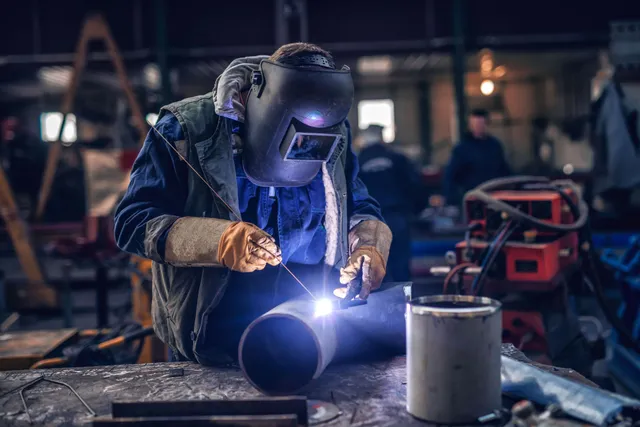
Industrial progress has always depended on the ability to turn ideas into reliable products. From large manufacturing plants to advanced infrastructure projects, precision and durability remain essential. One of the driving forces behind this progress is metal fabrication, a process that transforms raw metal into customized components used across countless industries. As technology advances, fabrication methods continue to evolve, enabling businesses to build stronger, smarter, and more efficient products. Driving Precision in Modern Manufacturing Manufacturers today face increasing demands for accuracy, consistency, and faster production cycles. Every component must meet strict quality standards while fitting seamlessly into larger systems. Modern fabrication techniques make this possible by combining advanced machinery with skilled craftsmanship. Computer-controlled equipment allows fabricators to produce highly detailed parts with minimal variation, reducing waste while improving reliability. This level of precision supports industries where even the smallest measurement can influence performance, including automotive production, heavy machinery, and industrial equipment. Supporting Innovation Across Industries Innovation often begins with the ability to create custom solutions. Engineers frequently develop unique designs that require specialized metal components rather than standard off-the-shelf parts. This is where metal fabrication plays a vital role. Custom fabricated products help manufacturers experiment with new concepts, improve equipment performance, and respond quickly to changing market demands. Whether creating structural frames, machine housings, protective enclosures, or complex assemblies, fabrication enables businesses to transform innovative ideas into practical products. The flexibility of fabrication also allows companies to produce prototypes before moving into full-scale manufacturing, helping identify design improvements while reducing development risks. Advanced Technology Is Transforming Production Technology has dramatically changed the way fabrication facilities operate. Automated cutting systems, robotic welding, laser technology, and computer-aided design software have increased productivity while maintaining exceptional quality. Automation minimizes repetitive manual tasks and helps maintain consistent production standards throughout large manufacturing runs. Digital design software enables engineers to visualize products before fabrication begins, reducing costly revisions and shortening production timelines. These technological improvements also improve workplace safety by allowing automated systems to perform hazardous operations while skilled professionals focus on quality control and complex assembly work. Improving Efficiency and Sustainability Industrial innovation is no longer focused only on production speed. Sustainability has become an important business objective as companies work to reduce environmental impact without sacrificing performance. Efficient fabrication processes optimize material usage, reducing scrap while maximizing every sheet, plate, or section of metal. Many facilities also recycle leftover materials, helping conserve natural resources and lower production costs. Energy-efficient machinery and streamlined workflows further contribute to sustainable manufacturing practices. Businesses benefit from lower operational expenses while meeting growing environmental expectations from customers and industry regulators. Strengthening Supply Chain Flexibility Global markets continue to experience supply chain disruptions, making flexibility increasingly valuable. Companies that rely on locally fabricated components often gain greater control over production schedules and inventory management. Working with experienced fabrication specialists allows manufacturers to respond quickly to changing project requirements, urgent repairs, or customized orders. Faster turnaround times reduce delays and help businesses maintain productivity even during challenging market conditions. This adaptability has become a competitive advantage for organizations seeking reliable manufacturing partners capable of supporting both small specialized orders and large production volumes. Meeting the Demands of Emerging Industries New industries are creating fresh opportunities for fabrication specialists. Renewable energy projects, electric vehicles, smart infrastructure, aerospace technology, and advanced robotics all require precision-engineered metal components. As these sectors expand, fabrication companies continue investing in new equipment, employee training, and advanced manufacturing techniques to meet evolving technical requirements. Their ability to produce complex, high-performance components supports innovation in industries shaping the future of global manufacturing. This constant evolution demonstrates that fabrication is not simply a production process but an essential contributor to technological advancement. Building Long-Term Industrial Growth Successful industries depend on strong partnerships between designers, engineers, manufacturers, and fabrication experts. Collaboration ensures products meet performance expectations while remaining practical to manufacture at scale. As customer expectations continue rising, businesses increasingly value fabrication partners capable of delivering quality, consistency, and technical expertise. From concept development to final production, every stage benefits from precise engineering and skilled workmanship. Industrial innovation will continue to accelerate as manufacturing technologies evolve. Companies that embrace advanced fabrication capabilities position themselves to create stronger products, improve efficiency, and remain competitive in rapidly changing markets. Conclusion The future of manufacturing depends on continuous improvement, adaptability, and technical excellence. Metal fabrication remains at the center of this transformation by enabling customized production, supporting technological innovation, and improving manufacturing efficiency across multiple industries. As businesses invest in smarter processes and advanced engineering, fabrication will continue to play an essential role in building the next generation of industrial solutions.

How Documentation Can Strengthen An Employment Discrimination Claim?

Long-term, discrimination at work can affect an employee both financially and mentally. If a person is subjected to discrimination based on their race, gender, age, disability, religion or other protected characteristic, then it can be difficult to prove that this has occurred. Personal experience certainly matters, but more objective evidence often counts for a lot. As a result, proper documentation can be one of the most critical elements of any employment discrimination action. Why Evidence Matters In Workplace Disputes? Most employment discrimination cases do not turn on any single incident. Instead, it is often a pattern of behavior that reflects unfair treatment over time. Without written records or some other form of proof, it may be difficult to determine what actually took place or when it did. Properly documenting things allows you to build a timeline of events of what actually transpired. This can demonstrate how decisions were made regarding your employment and whether other employees faced similar situations but in different ways. This data could help in internal reviews, negotiations for settlements, or cases that end up going to court. Keep Detailed Records From The Beginning Writing down problems as they occur is one of the employee’s behaviors. If you wait a few weeks or longer, several key elements get forgotten or dates and conversations blur into one another. A useful record might have: Even little things from the scene that don’t seem to make any difference (but on their own) may be part of a larger puzzle when viewed in connection with other evidence. Save Workplace Communications A lot of discrimination cases are helped by writing things down. Emails, messages, company announcements, meeting invitations and performance reviews can provide clues about what went wrong and how a boss communicated with an employee. Employees should retain official work documents that they are legally permitted to. Those records might indicate a change in treatment, unconvincing explanations for an adverse action or comments that lend support to allegations of discrimination. But also ordering the things by when they have taken place helps a lot to comprehend the order of events. Click here to find professional resources explaining your rights at work or how to evaluate a claim, if you need more legal advice. Performance Records Can Tell An Important Story Performance reviews are at the very heart of many cases of discrimination in the workplace. For example, if an employee had consistently positive performance reviews before reporting discrimination at work or requesting workplace accommodations and then began receiving poor reviews soon after, that could be a sign of something more nefarious. Awards, accolades, completed assignments, client feedback and productivity reports can also show a good work history. This type of documentation could support a defence against any argument that the adverse employment action was related only to poor performance rather than illegal discrimination. Witnesses Can Support Documented Events Testimony in writing is useful, but statements by witnesses will probably be more persuasive. Those employees who observed discriminatory actions taken at work, like coworkers, managers or others, may be crucial in corroborating key events. Immediately downing the names of potential witnesses will help you track these individuals many months, or longer, if an investigation or court case ensues. The credibility of written evidence is often enhanced by having independent accounts. Avoid Altering Or Creating Records Later Facts should be presented on proper documents. Retrofitting records, or establishing them post-facto, can diminish credibility and render a claim weaker than it otherwise would necessarily be. When it comes to retaining notes, emails and texts, keep them in their original form. Maintaining information in its original format demonstrates that it has not been altered and establishes authenticity if evidence is challenged in court, she said. Understand Company Reporting Procedures Many organizations have processes for allowing employees to report discrimination. Filing a complaint through the appropriate avenues creates another valuable record that documents the employee raised concerns and provided an opportunity for the employer to address them. Make sure that you have copies of all complaint forms, investigation updates, and employer replies. Such records could indicate the seriousness with which the complaint was taken and whether proper procedures were followed. Conclusion Employment discrimination claims are based on facts that can be backed up with compelling evidence. Diligent note-taking builds a chronology, flags critical messages as well as own confirmations of witnesses, and raises confidence in general. But maintaining accurate records at all times would help employees to defend their rights better if they eventually have to go to court.

How Breast Augmentation Can Restore Volume After Pregnancy Or Weight Loss

Major changes, such as substantial weight loss or pregnancy, may frequently be accompanied by better health and personal achievement. But they may also have unexpected effects on the body. Breast volume loss is one of the most common concerns. Changes in glandular tissue, skin elasticity, and fat distribution may make breasts seem smaller, less full, or lose their natural form. Breast augmentation may be an effective approach to restore fullness and improve your natural body proportions if you wish to return to a more balanced look. Factors That Influence Breast Size The breast is made up of fatty tissue, glandular tissue, and connective tissue. The hormonal changes of pregnancy help prepare the body for breastfeeding and sometimes result in bigger breasts. The glandular tissue contracts after breastfeeding, and the skin will not fully retract. This may leave a deflated appearance. The same is true for losing weight. Breasts are composed of a fair amount of fat; thus, when body weight is lost, frequently the breasts are lost as well. Many people are thrilled when they reach their fitness goals but may be unhappy if their breast volume decreases more than they had hoped. Contemporary Methods To Recover Fullness Today, breast augmentation techniques are quite personalized. Surgeons don’t approach every patient with a cookie-cutter mentality; they evaluate anatomy, lifestyle, and aesthetic goals before offering the best option for that patient. Patients may pick from a range of implant types and shapes and sizes to produce a look that enhances their natural proportions. Advances in surgical procedures also allow for more precise placement of implants to help attain smooth, natural-appearing contours that fit the patient’s physique. It’s not about becoming bigger but about getting back the fullness you may have lost after pregnancy or severe weight changes. Improving Body Proportions In case of a reduction of the breast volume, the complete balance of the body might be changed. Even if the individual is in excellent physical condition, the hips, waist, and shoulders may seem less balanced. Restoring breast fullness typically creates a more harmonious profile. Swimsuits are more appealing for many patients, clothing fits better, and there are more choices for different styles. This greater balance may provide a very different overall look without being completely fake. Raising Your Self-Esteem After Major Life Changes Successful weight loss and pregnancy are major life accomplishments. Many people spend a lot of time and energy trying to better themselves and their health. Restoring breast volume may be the last step to feeling entirely comfortable with their new appearance. Even when cosmetic surgery can’t determine self-worth, many patients say they feel more confident after addressing physical changes that can’t be reversed by exercise or a healthy diet. Feeling positive about your appearance may increase your confidence in social settings, work, and everyday life. Customization Creates Organic Outcomes One of the main pluses of current plastic surgery is the ability to customize every portion of the treatment. Surgeons consider items such as: Current Breast Shape Also, the choice of implant will depend on the breadth of the chest, flexibility of the skin, and volume of breast tissue. A well-considered strategy means that the end product looks balanced, not over the top. Activity Level And Lifestyle  Those who are active usually have different goals than those who are seeking a more dramatic improvement. The implant placement and size may be chosen to promote both physical activity and attractiveness. Goals For The Future These points should be discussed during the consultation for those who desire to become pregnant in the future or lose additional weight. The comprehensive therapy approach helps to achieve satisfying results for long-term objectives. More Improvement By Combining Methods Some people develop laxity and volume loss of the skin during pregnancy or considerable weight loss. In certain cases, restoring volume alone may not be enough to reverse the modifications. Sometimes augmentation is paired with a breast lift to restore fullness and breast posture. The combination allows the surgeon to increase projection and shape the breast at the same time for a more youthful appearance. The best treatment is usually a subject of discussion with a qualified plastic surgeon since it depends on the particular anatomy of every given patient. Conclusion Pregnancy and weight loss may dramatically change the size and shape of the breasts, even if overall health is better. Breast augmentation may provide many beneficial ways to recover confidence, body proportion, and fullness. Today’s advanced techniques and highly individualized treatment regimens allow patients to get natural-looking results that fit their own goals, and leave them feeling more comfortable and confident in their own bodies.