
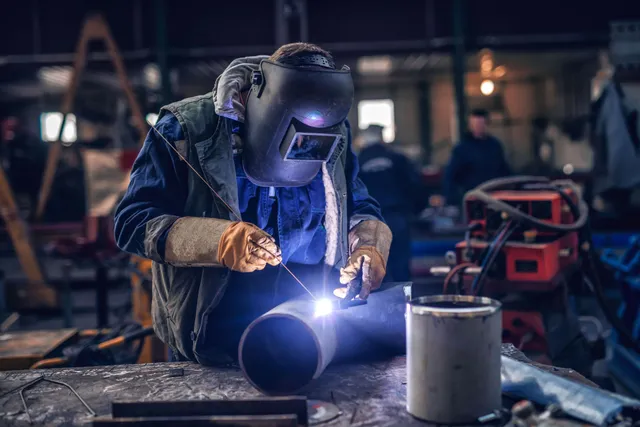
Industrial progress has always depended on the ability to turn ideas into reliable products. From large manufacturing plants to advanced infrastructure projects, precision and durability remain essential. One of the driving forces behind this progress is metal fabrication, a process that transforms raw metal into customized components used across countless industries. As technology advances, fabrication methods continue to evolve, enabling businesses to build stronger, smarter, and more efficient products.
Driving Precision in Modern Manufacturing
Manufacturers today face increasing demands for accuracy, consistency, and faster production cycles. Every component must meet strict quality standards while fitting seamlessly into larger systems. Modern fabrication techniques make this possible by combining advanced machinery with skilled craftsmanship.
Computer-controlled equipment allows fabricators to produce highly detailed parts with minimal variation, reducing waste while improving reliability. This level of precision supports industries where even the smallest measurement can influence performance, including automotive production, heavy machinery, and industrial equipment.
Supporting Innovation Across Industries
Innovation often begins with the ability to create custom solutions. Engineers frequently develop unique designs that require specialized metal components rather than standard off-the-shelf parts. This is where metal fabrication plays a vital role.
Custom fabricated products help manufacturers experiment with new concepts, improve equipment performance, and respond quickly to changing market demands. Whether creating structural frames, machine housings, protective enclosures, or complex assemblies, fabrication enables businesses to transform innovative ideas into practical products.
The flexibility of fabrication also allows companies to produce prototypes before moving into full-scale manufacturing, helping identify design improvements while reducing development risks.
Advanced Technology Is Transforming Production
Technology has dramatically changed the way fabrication facilities operate. Automated cutting systems, robotic welding, laser technology, and computer-aided design software have increased productivity while maintaining exceptional quality.
Automation minimizes repetitive manual tasks and helps maintain consistent production standards throughout large manufacturing runs. Digital design software enables engineers to visualize products before fabrication begins, reducing costly revisions and shortening production timelines.
These technological improvements also improve workplace safety by allowing automated systems to perform hazardous operations while skilled professionals focus on quality control and complex assembly work.
Improving Efficiency and Sustainability
Industrial innovation is no longer focused only on production speed. Sustainability has become an important business objective as companies work to reduce environmental impact without sacrificing performance.
Efficient fabrication processes optimize material usage, reducing scrap while maximizing every sheet, plate, or section of metal. Many facilities also recycle leftover materials, helping conserve natural resources and lower production costs.
Energy-efficient machinery and streamlined workflows further contribute to sustainable manufacturing practices. Businesses benefit from lower operational expenses while meeting growing environmental expectations from customers and industry regulators.
Strengthening Supply Chain Flexibility
Global markets continue to experience supply chain disruptions, making flexibility increasingly valuable. Companies that rely on locally fabricated components often gain greater control over production schedules and inventory management.
Working with experienced fabrication specialists allows manufacturers to respond quickly to changing project requirements, urgent repairs, or customized orders. Faster turnaround times reduce delays and help businesses maintain productivity even during challenging market conditions.
This adaptability has become a competitive advantage for organizations seeking reliable manufacturing partners capable of supporting both small specialized orders and large production volumes.
Meeting the Demands of Emerging Industries
New industries are creating fresh opportunities for fabrication specialists. Renewable energy projects, electric vehicles, smart infrastructure, aerospace technology, and advanced robotics all require precision-engineered metal components.
As these sectors expand, fabrication companies continue investing in new equipment, employee training, and advanced manufacturing techniques to meet evolving technical requirements. Their ability to produce complex, high-performance components supports innovation in industries shaping the future of global manufacturing.
This constant evolution demonstrates that fabrication is not simply a production process but an essential contributor to technological advancement.
Building Long-Term Industrial Growth
Successful industries depend on strong partnerships between designers, engineers, manufacturers, and fabrication experts. Collaboration ensures products meet performance expectations while remaining practical to manufacture at scale.
As customer expectations continue rising, businesses increasingly value fabrication partners capable of delivering quality, consistency, and technical expertise. From concept development to final production, every stage benefits from precise engineering and skilled workmanship.
Industrial innovation will continue to accelerate as manufacturing technologies evolve. Companies that embrace advanced fabrication capabilities position themselves to create stronger products, improve efficiency, and remain competitive in rapidly changing markets.
Conclusion
The future of manufacturing depends on continuous improvement, adaptability, and technical excellence. Metal fabrication remains at the center of this transformation by enabling customized production, supporting technological innovation, and improving manufacturing efficiency across multiple industries. As businesses invest in smarter processes and advanced engineering, fabrication will continue to play an essential role in building the next generation of industrial solutions.